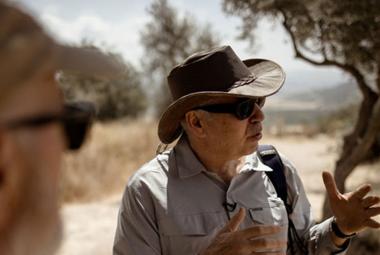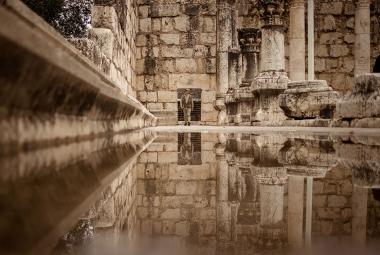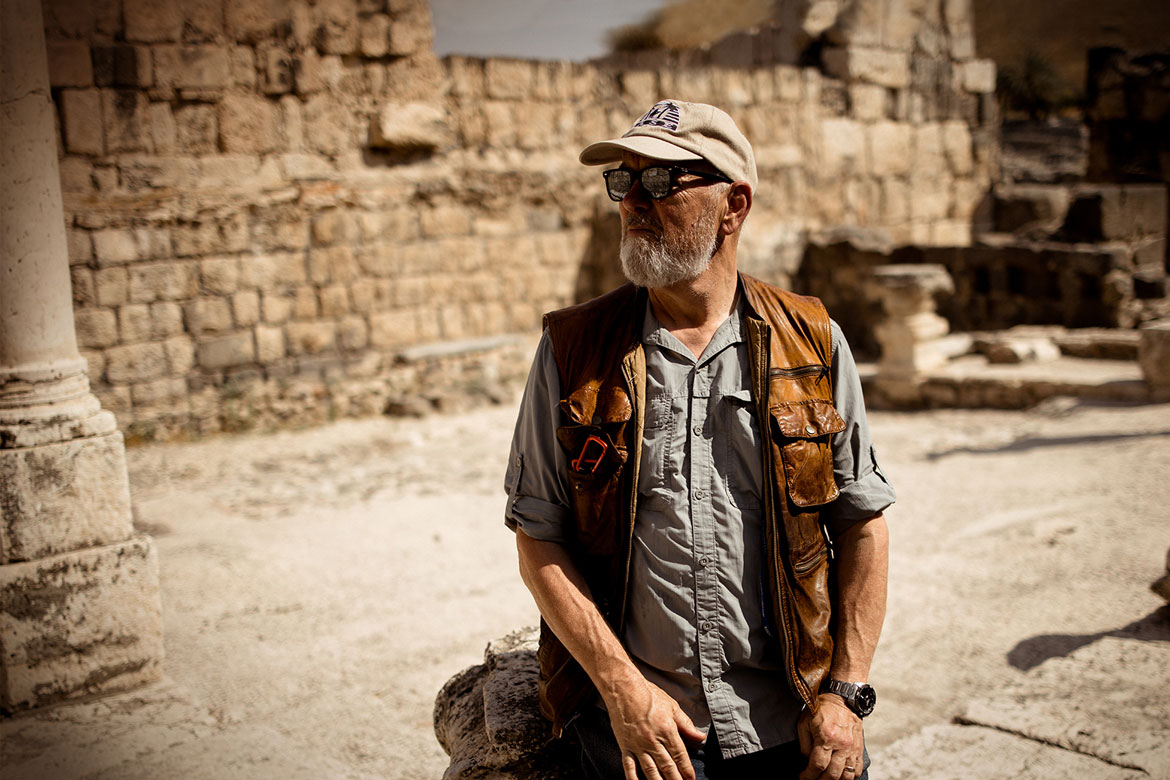
No other modern nation has ever had to defend its right to exist as much as the nation of Israel today. Of the 193 nations in the United Nations, over one-third of the proclamations of the United Nations against a nation have been against little Israel. They constantly have to defend their right to exist as a nation.
Most people believe that 20th-century Zionism birthed the nation of Israel in 1948. Nothing existed before that. That is the popular narrative today. The belief is that it was all the result of European colonization.
It began in 1917 with the Balfour Declaration, when Lord Balfour wrote a note to the Rothschilds, who were Jews, and said that he believed that we needed to establish a national homeland for the Jewish people.
The Declaration
Then, in 1920, the League of Nations adopted a resolution at the San Remo Conference in Italy. It was the United Kingdom. France, Italy, and Japan came together and acknowledged that they needed to go forward with what Great Britain was proposing concerning a homeland for the Jews. They confirmed that the Jews have a right to be there, and they don’t have a place that is their home, but they have an ancestral home.
Then, in 1922, their resolution progressed to what was called the British Mandate for Palestine. Then the British moved in and began partitioning the land into the original area of Palestine, as it was previously called.
Even with the approval of the League of Nations, we find the criticism of Israel’s right to the land is based on the belief that it has no ancient claim to its current homeland. Therefore, claiming that there is no historical evidence to support entitlement. The consensus was that the biblical text is a mere collection of myths and moral teachings of Judaism.
Now, this is an emerging narrative gaining strength worldwide, especially amid the unrest in the Middle East. It’s amazing how often prominent individuals will come out with statements like, “the most dangerous nation in the world is Israel.” Wow, that’s quite a statement. Or “They will be the center of World War three.” Well, technically, the Bible tells us that will be true, but that’s a different Bible study.
Some see an archaeological vacuum that allows the creation of a false history for the region of Israel. Again, this is a growing narrative that is coming out not just from the secular universities and in the intelligentsia, but also, sadly, within many evangelical churches, which are now beginning to question whether modern-day Israel is the fulfillment of the Old Testament. Do they have a right to the land? Thus, this popular narrative tries to de-legitimize Israel. And, of course, many popular people share this view. They have all come with this idea of free Palestine, you know, and the genocide against the Gazans. “Palestinians should be free from the river to the sea” is the slogan promoted by these popular activists. In other words, get rid of the current secular state of Israel. It’s illegitimate.
This is a depiction of what the world is trying to sell you. What’s important to see is that this new narrative did not really begin formally until 2003. It was founded by a Syrian businessman who launched the Free Palestine movement. It is a great little catch phrase, and it caught fire. And people have picked it up all around the world, not even understanding what they’re saying. But that’s what Israel faces today.
The Debate
In the late 20th century, in the 1980s, a fierce debate began, asking this question: how much history is embedded in the biblical text? In general, is it 0%? Is it just mythology and legend? Well, what is it, and how do you quantify what to trust?
It’s astonishing to me how many evangelical pastors will still teach that the Book of Genesis is just a poetic reference to something we can’t verify, let alone the historical books of the beginning with Abraham through David, Solomon, and the Kingdom age of the nation of Israel, that it really we’re not to take it too seriously, because there’s nothing there to validate that history.
Therefore, the history of Israel is facing a frontal academic assault. The first are attacks from outside of Israel. You would expect that those who would like to see the modern state of Israel eliminated. The second, strangely enough, are acts within Israel.
A professor of biblical literature in the Department of Religious Studies at the University of North Carolina, John Van Seters, wrote in his book, “The Yahwist.”1 This book focuses on an antiquarian, historical, and historian writing about Israel’s origin under the influence of the Babylonian civilization, while in exile in Babylon during the sixth century BCE.
In his book “Abraham in History and Tradition”2 he argues that no convincing evidence exists to support the historical existence of Abraham and the other Biblical Patriarchs or the historical reliability of their origins in Mesopotamia and their exploits and travels as depicted in the book of Genesis. When you have these “reputable individuals” in these higher states of learning, sow seeds of discord and disbelief into the minds of young minds it eventually matures and becomes a deeply rooted as fact.
Then you have Thomas L Thompson in his book “The Mystic Past: Biblical Archeology and the Myth of Israel.”3 He says there never was a ‘united monarch’ of Israel in biblical times – We can no longer talk about a time of the Patriarchs – The entire notion of ‘Israel’ and its history is a literary fiction.
You have Keith Whitelam in his book called “The Invention of Ancient Israel: The Silencing of Palestinian History." Whitelam presents two theses that ancient Palestine’s history could be separate from biblical studies, and that Western scholarship invented ancient Israel while silencing Palestinian history. This is the growing narrative, solidifying around the globe.
You have Professor Zeev Herzog, an archeologist from Tel Aviv University, who said, “The Israelites were never in Egypt, did not wander in the desert, did not conquer the land in a military campaign, and did not pass it on to the twelve tribes of Israel. Perhaps even harder to swallow is the fact that the United Monarchy of David and Solomon, which the Bible describes as a regional power, was at most a small tribal kingdom. It will come as an unpleasant shock to many that the God of Israel, Jehovah, had a female consort, and that the early Israelite religion adopted monotheism.”4
The Question
Given the influence of these academic professionals, we can point to a period from the 1980’s to the 1990s, referred to as the minimalist movement. It had a wide-reaching effect. The premise is that the Bible was written during the Hellenistic period. About 700 years after the period it describes. It’s a work of going back in time and inventing a past with no evidence for David, Solomon, Solomon’s Temple, or the other kings, and presenting them as only mythological figures. They’re no different than Robin Hood or King Arthur. They’re just nice moral stories that we can read and enjoy, but we see nothing of facts in any of these tales.
I have lived in England for 21 years. You can actually travel to Nottingham, which was the mythical home of Robin Hood. A place called Sherwood Forest is there. If you follow the signs, it will actually take you to the Great Oak, where Robin Hood would hide with his band of merry men. While standing inside the tree, you think, “Yeah, even Disneyland does a better job of faking history.” But that’s how the Bible and its stories are being redefined. The Bible is no more than a moralistic teaching based on mythology and legend.
The Discoveries
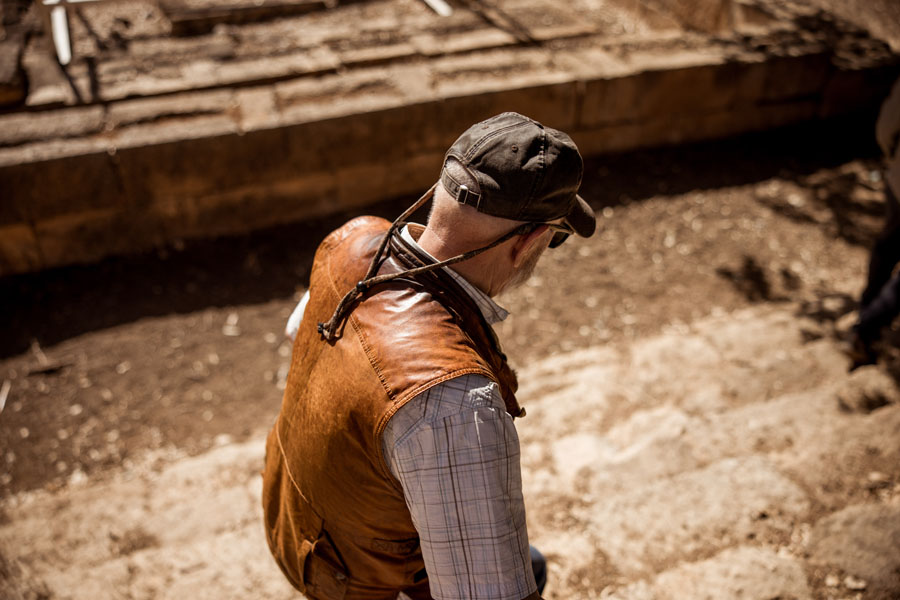
Yet, for thousands of years, the biblical account of history has been accepted as representing accurate historical data. Based on the biblical text, archeologists have found many sites previously thought to be only mythical. The site of ancient Jericho, the site of ancient Nineveh, and the site of ancient Babylon. Previously, these sites were believed to be nothing more than mythical cities described in ancient documents, and they were said never to have existed because of a lack of evidence.
But archeologists in the latter part of the 19th century began to take the Bible as a compass and began to research based on the description given in Scripture. Then they found evidence that showed these places were not merely mythological.
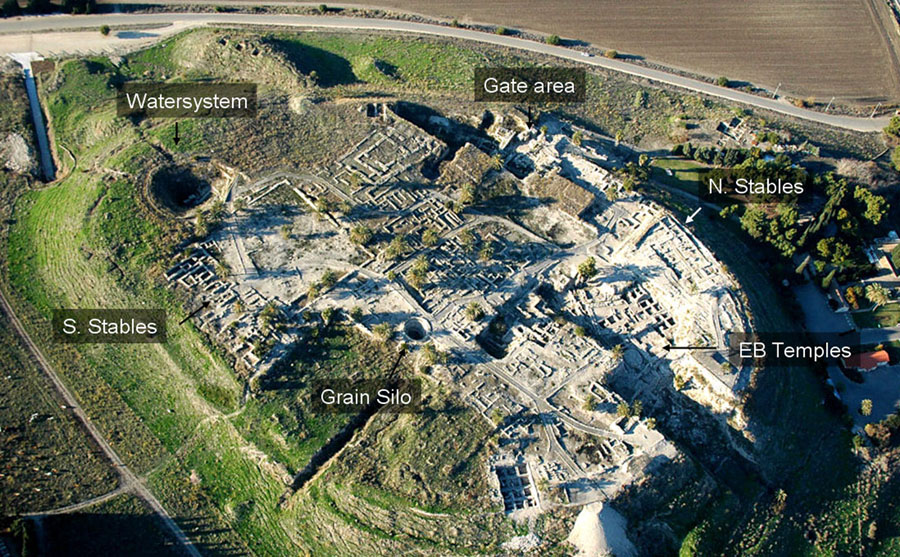
We’ll deal with Jericho first. Charles Warren identified this site of ancient Jericho in 1868. John Garstang excavated the site in the 1930s. Garstang found dozens of jars of grain dating from the late Canaanite city of Jericho at the time of the Exodus. All right. So they begin to find objective proof. Yes, there is actually an ancient city of Jericho. It seems to have many layers of destruction that are similar, and rebuilding that is similar to the biblical description of what took place under Joshua, then later, rebuilding the city under King Ahab. You can visit that today. In fact, when we take groups there, I like to go off track a little bit and point out to them the destruction layer that’s covered now with dirt. You can begin to see the ancient red brick walls, many of which fell during the time of Joshua and the Children of Israel. Therefore, it is objective, and there’s a lot more.
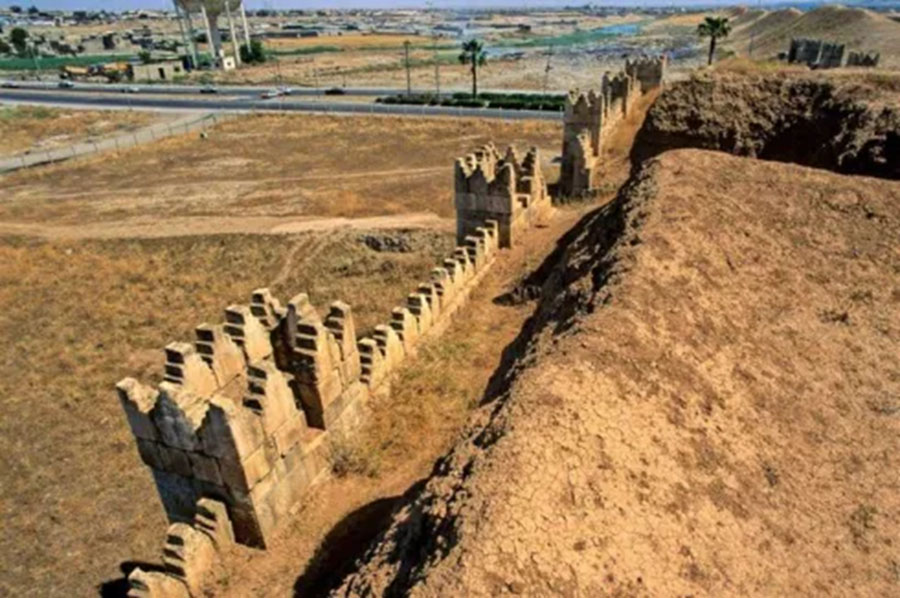
Next is the ancient city of Nineveh. The Bible describes a city that took three days to cross, and pretty much everyone who read it would say, “That’s preposterous.” There’s never been a city that large at that time. Yet in 1820, the Archaeologist Claudius Rich was the first to survey and map Nineveh.
The area of Nineveh has now been well excavated. You can view the artifacts of that exploration in the British Museum. Thank God for the British, those colonialists, because they went in and they preserved what was there and revealed for all of us to see an amazing capital city. And yes, it is large enough to take a three-day walk through this city. It’s an amazing place, with a highly developed culture and art, and we can learn a lot from this ancient city. One important discovery was that it has historical links with ancient Israel. In fact, it has a depiction on the palace wall of the siege of the Israelite city of Lachish by Sennacherib. The Bible referred to it in Chronicles 32:9. What’s important to see is that they took more than a year to build a siege ramp to breach the wall. Lachish was the secondary capital of Judah at that time, and Sennacherib would spend so much time trying to breach the wall there that, by the time he had finished and conquered Lachish, he took his troops to Jerusalem. And of course, we have historical records, and also in the book of Isaiah, when they begin sending threats against the King of Judah. That’s when Hezekiah constructs his famous tunnel from the Gihon Springs to the Pool of Siloam in preparation for the siege that’s coming. By the time Sennacherib brings his army there, the angel of the Lord goes out and wipes out 185,000 of them. One angel. So his troops were never able to breach the walls of Jerusalem because they expended all of their efforts here at Lachish.
We normally take people there during our Israel Tours because it’s a beautiful sight. It only has two archaeological layers. I love taking people there because it’s only partially excavated. Professor Yosef Garfinkel from the Hebrew University often joins us. He will explain that the pottery scattered around on the ground was in use during the time of David, Solomon, and Rehoboam.
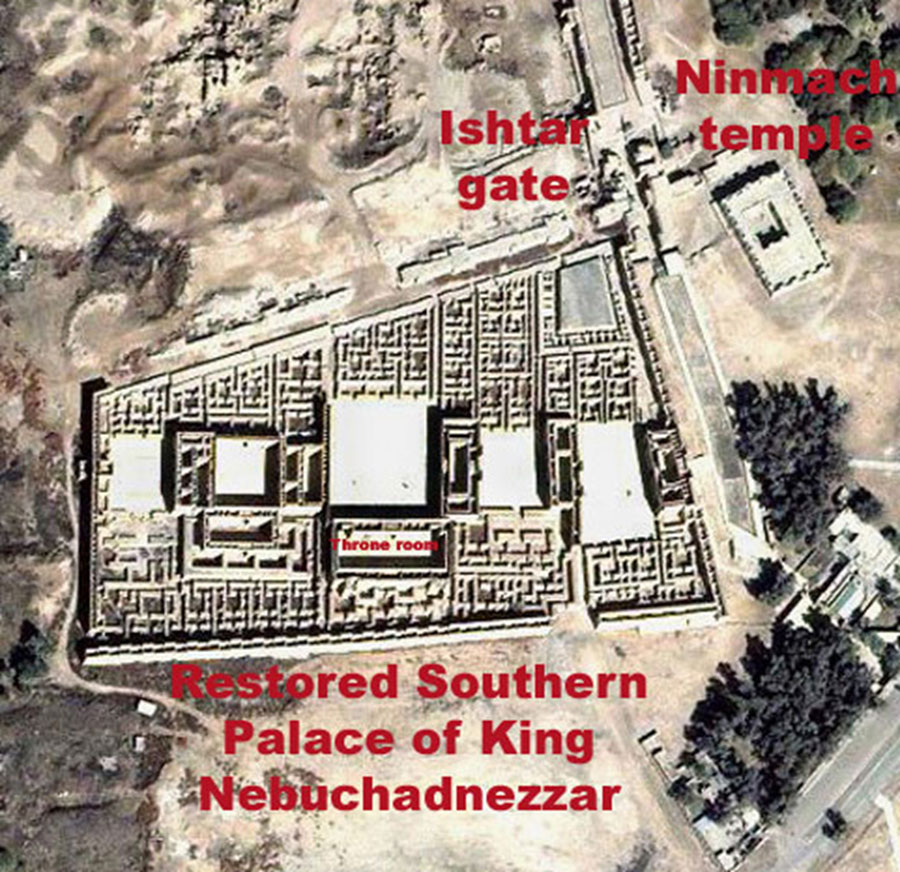
Not only do you have really great evidence for the cities of Jericho and Nineveh, but also for Babylon. Again, the biblical description of Babylon is just kind of hard to accept without objective proof. According to extra-biblical sources, it was a city with hanging gardens and spanned the river Euphrates. It had a wall so thick that they could run chariot races 12 wide on top of it. It was a massive, impregnable force. It was the archaeologist Robert Koldewey who discovered the ancient city of Babylon in 1899. And lo and behold, as they began to wipe away the dust of time, they began to discover the ancient city and perimeter of Babylon. Saddam Hussein tried to rebuild the city as his capital. He wanted to restore King Nebuchadnezzar’s palace because he believed he was the reincarnation of Nebuchadnezzar. They found the Ishtar Gate and many references to Asherah, the female form of Baal, and all the mysticism that originated in this city. It is also important to note that this city was never destroyed. It was simply left to rot and ruin. In fact, it was Alexander the Great, as he moved eastward with the expansion of the Greek Empire, who, upon arriving in Babylon, made it his capital and died there.
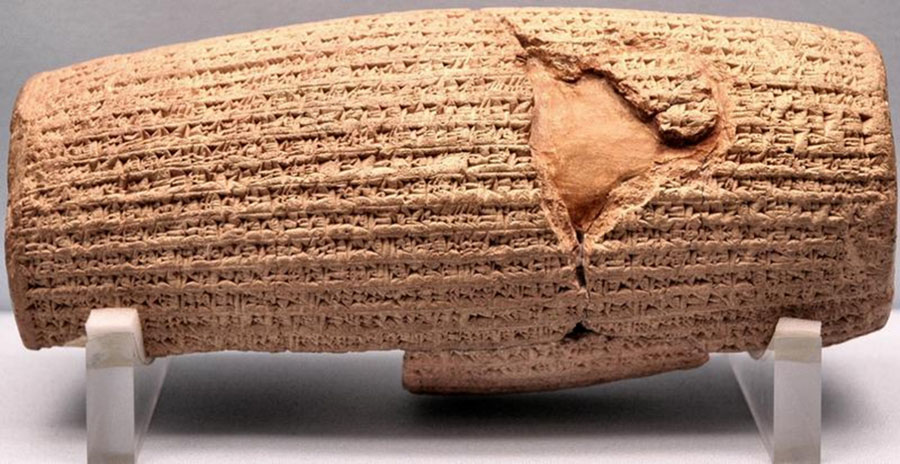
It is here that they found the Cyrus cylinder. This is also in the British Museum. Here we have a revelation that’s independent of the Bible. This clay cylinder is inscribed in Babylonian cuneiform with an account by Cyrus, the king of Persia, of his conquest of Babylon in 539 BC, and the capture of Nabonidus, the last Babylonian king. Another example of how Scripture is validated. All right. Who is the cylinder referring to? The Israelites. By the way, given the current political conditions in the world and the questions going on, I would like to remind people that the first Zionists in the world were the Persians. Cyrus decided it was right for the Israelites to return to their ancestral land. He will even use money from the Persian Empire to send you back. First to rebuild the temple under Ezra and the city of Jerusalem under Nehemiah.
The Chronology
Though you can easily see the evidence of other ancient civilizations mentioned in the Bible around Israel, some critics suggest that serious questions remain about Israel’s history. The impact of the minimalist movement has provided a foundation for the marginalization of the State of Israel on a global level. The question they like to raise is this: “Is there any evidence for a United Kingdom era?” The chronology of David, about a thousand BC, is based on the combination of biblical and Egyptian chronologies. There is a link between the chronology that you get in the Old Testament and also the Egyptian chronologies. David’s reign lasted 40 years, then he was succeeded by Solomon, who reigned 40 years, and then Rehoboam reigned 5 years before the campaign of Pharaoh Shishak I of Egypt. These cities are identified in the Temple of Karnak. The campaign in Israel took place in 925 BC. Therefore, we have an independent date stamp on this verifiable time period. No one will question that.
Now we can do simple math: 925 plus five plus 40 plus 40, or really minus, is 1010 BC. That would be using the invasion’s starting point. That’s a reliable, provable date. It’s outside of the biblical text. Therefore, King David lived about the 10th century BC.
Yet for a century, no clear archaeological remains have been found in Judea from the time of David and Solomon. When you consider what they built and established, there was a sad absence of hard evidence of the United Kingdom of Israel.
There are large stone structures south of the Temple Mount, which are referred to as David’s Palace. But only the building’s foundation survived, so its data is unclear. You can’t date Stone. You can say this looks like something that might have been from that era. You can date the general time around it, but it’s very difficult, especially in Jerusalem, which has been besieged and destroyed many, many times. I say to people that trying to do archeology in Jerusalem is sort of like putting a green pea into a blender, spinning the blades, and saying, “Now go find the pea.” It’s all mixed up. The destruction layers are all mixed up. It’s very, very difficult to do archaeology with these kinds of conflicts. There is the step-stone structure that’s there in the city of David. Was this the base of David’s palace? Well, you can hold that conjecture, but you can’t say it with absolute surety because there’s no clear data to place it during the time of David.
There was a Solomon-era city wall in what’s called the Ophel. This is a built-up area, but again, it’s difficult to accurately date that because it’s in this blender, which has been built up and destroyed so many times. And so, for archeologists and historians, they still have to honestly hold their hand up and say, “Okay, there’s no clear data,” which feeds the flames of the minimalists who love to point fingers and say, “See, I told you there was nothing there.”
The Key Finding
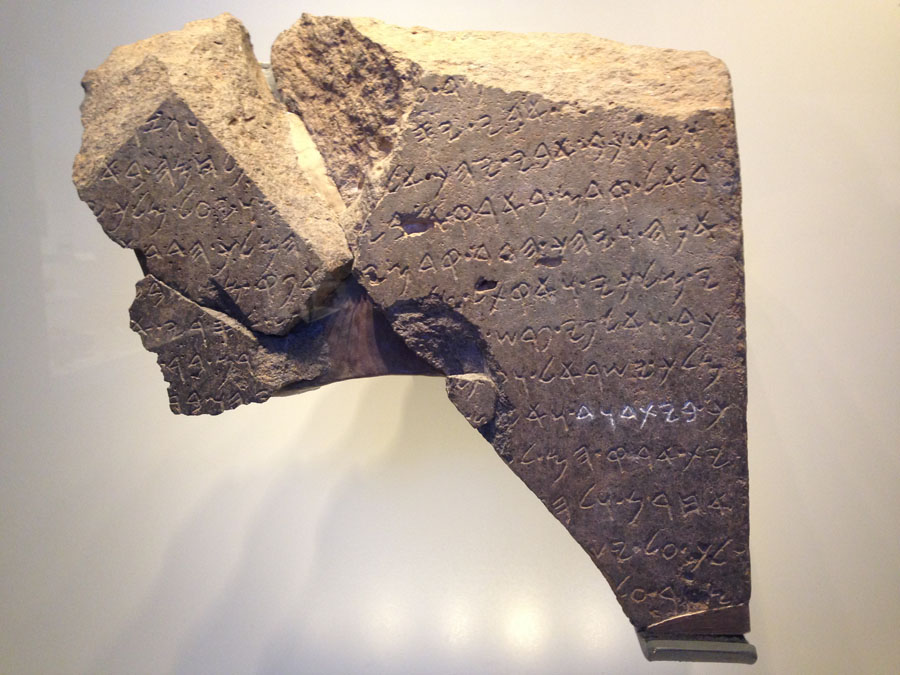
Everything changed in 1993 with the discovery at Tel Dan. A “Tel” means a mound that covers a previous city or several cities. Tel Dan has a history that goes back to the Pre-Abraham Canaanite era. After the conquest under Joshua, the Tribe of Dan settled here; you can read about it in the Book of Judges. But, in 1993, archeologists found an inscription on a basalt stele in three pieces. An Aramaic king erected it in the mid-ninth century BC. The inscription, which was written in Old Aramaic, describes his ascension to the throne and his victory over the King of Israel and “over the House of David.”
Notice that the first mention of David is not just the name David, but the House of David. This is a big deal. Although the Aramaean king’s name is not found in the surviving text, the most likely candidate is Hazael of Damascus, whose rivalry with Israel was recorded in the Bible, 2 Kings chapters 8:7-15. Now there’s a link within a real archeological find.
After this discovery of the Dan inscription, a new minimalist theory was proposed that David was only a small leader in a village, like one of the judges. You know, we had these judges arriving one by one, and David was just one of them, and he’s being treated differently. There was no kingdom, no fortified cities, no writing, and no administration. Indicating that there was no central government there.
The Proof
Then, in 2007, Professor Yosef Garfinkel of the Hebrew University made a discovery that changed everything...
Read Part 2 of The Evidence for Ancient Israel here.
You can watch the entire presentation by Ron Matsen on:
YouTube - Below, or our Official Channel https://www.youtube.com/watch?v=30qsoGA4kwA
K-House TV - https://www.khouse.tv/evidence
Notes:
1 The Yahwist: A Historian of Israelite Origins, Penn State University Press, 2013
2 Abraham in History and Tradition, Yale University Press, 1975
3 The Mythic Past: Biblical Archaeology And The Myth Of Israel. Basic Books 1999
4 Herzog’s cover page article in the weekly magazine Haaretz “Deconstructing the walls of Jericho”1999